


Sick
Sick VTF18-3F1140 Photoelectric proximity sensor PNP
Photoelectric proximity sensor detects objects at 3 mm to 90 mm with PNP output and IP67 metal housing
- Reliable detection from 3 mm to 100 mm with focused infrared optics
- Fast 2 ms response time enables 250 Hz switching frequency
- Robust IP67 nickel-plated brass housing withstands –25 °C to +70 °C
- Simple M12 4-pin connector for quick installation
- PNP light-switching output delivers up to 100 mA
Industrial photoelectric proximity sensor
The Sick VTF18-3F1140 is a cylindrical M18 photoelectric proximity sensor with background blanking. It operates on 10 V DC to 30 V DC and provides a PNP light-switching output rated at 100 mA. The sensor suits automation engineers and electricians who need reliable object detection in industrial environments.
Focused optics with fixed sensing range
Focused infrared optics produce a 3 mm light spot at 50 mm distance and enable detection from 3 mm to 90 mm without manual adjustment. The fixed range and lack of potentiometers simplify installation and prevent accidental misalignment. An IP67-rated nickel-plated brass housing protects the electronics in harsh conditions.
M12 4-pin connector for quick integration
A male M12 4-pin connector provides the sole electrical interface, requiring a matching cable or distribution box. The sensor switches at 250 Hz with a 2 ms response time, suitable for medium-speed counting or presence tasks. Buyers needing teach-in adjustment, NPN output or longer sensing distances must select a different model.
Highlights
- Reliable detection from 3 mm to 100 mm with focused infrared optics
- Fast 2 ms response time enables 250 Hz switching frequency
- Robust IP67 nickel-plated brass housing withstands –25 °C to +70 °C
- Simple M12 4-pin connector for quick installation
- PNP light-switching output delivers up to 100 mA
Specifications
| Brand | Sick |
|---|---|
| Model | SICK VTF18-3F1140 |
Questions about this item
Does the M12 connector or the nickel-plated brass housing need periodic replacement?
The sensor uses a male M12 4-pin connector and a nickel-plated brass housing rated IP67; neither has a stated replacement interval.
What limits continuous operation — the 250 Hz switching frequency or the 30 mA power draw?
The 250 Hz switching frequency caps the maximum detection rate; power consumption stays at 30 mA within the 10–30 V DC supply range.
How much heat does the 120 g metal body generate when running all day at 30 V DC?
At 30 V DC the sensor draws 30 mA (≈0.9 W), which the nickel-plated brass housing dissipates within the –25 °C to +70 °C operating range.
Also in this aisle
People compared these
Same shelf, same checkout — eight coins and a 30-minute rate lock.




SIEMENS
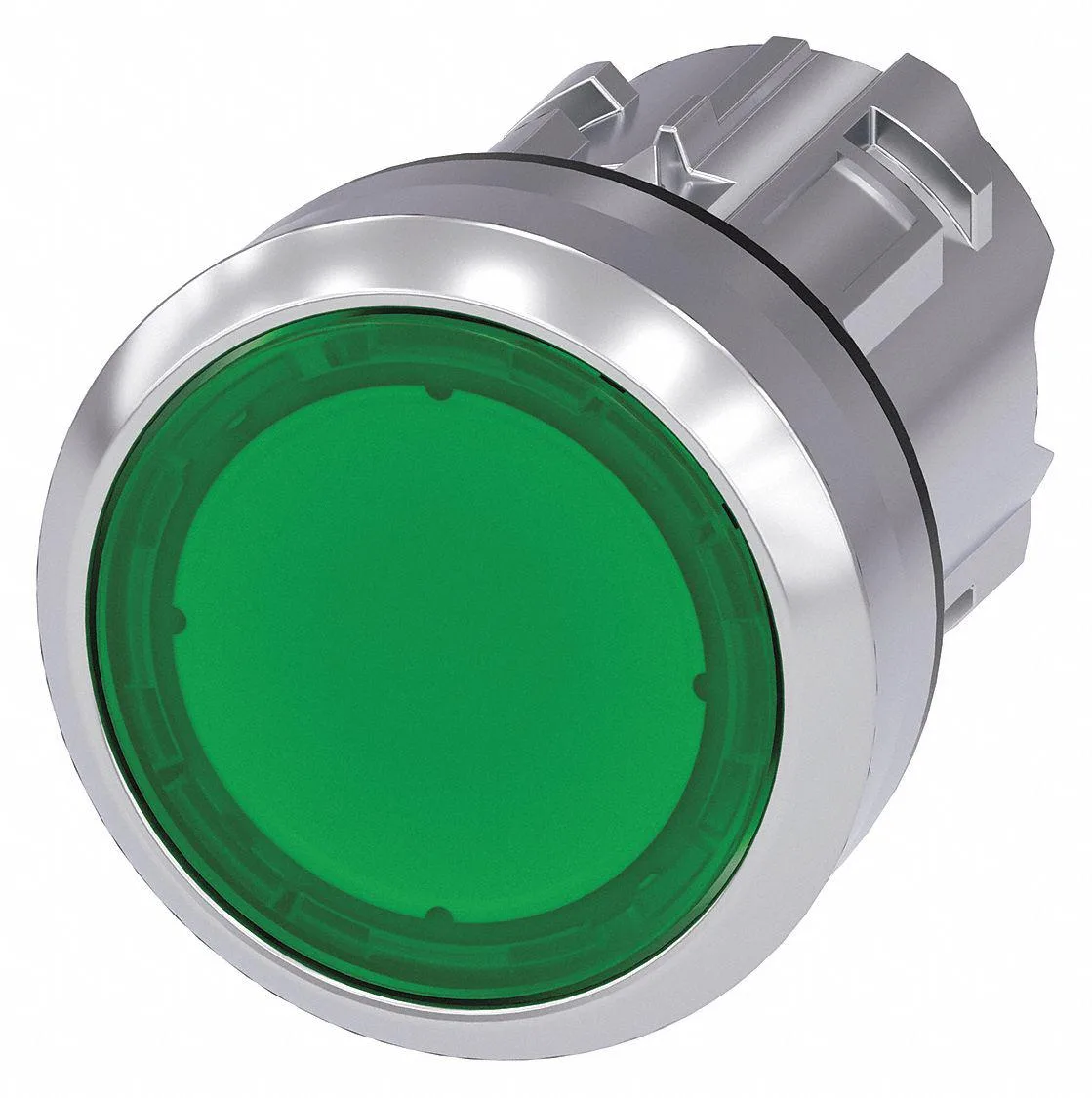
SIEMENS 52PP2D2AB 30 mm Illuminated Push Button Red 24 V LED 1NO/1NC
$179.99
0.0021343BTC
In stock