


Sick
Sick VS/VE18-3F3940 Through-beam photoelectric sensor PNP
Through-beam photoelectric sensor with 0–20 m range, PNP light-switching output and M12 connector
- Reliable detection up to 20 m with through-beam infrared technology
- Consistent switching at 250 Hz for fast production lines
- Precise sensitivity control via 270° potentiometer adjustment
- Durable IP67-rated PBT/PC housing withstands harsh environments
- Wide 10–30 V DC supply range simplifies system integration
Industrial through-beam sensor
The Sick VS/VE18-3F3940 is a cylindrical through-beam photoelectric sensor with a PNP switching output. It operates on a 10 V DC to 30 V DC supply and connects via a male M12 4-pin connector. The IP67-rated plastic housing measures 75 mm in length with an M18 x 1 thread diameter. This sensor suits industrial automation tasks requiring reliable object detection.
Sensing range and response limits
The sensor uses infrared light with a maximum sensing range of 0 m to 20 m and a practical sensing range of 0 m to 14 m. At the 14 m distance the light spot reaches approximately 700 mm diameter with a 2.8° dispersion angle. Response time is 2 ms yielding a switching frequency of 250 Hz. Sensitivity is adjustable via a 270° potentiometer.
PNP light-switching output
The single specification that decides fit is the PNP light-switching output with a maximum load current of 100 mA. Buyers whose control systems require NPN switching or dark-switching logic cannot use this unit. The sensor includes circuit protection and a test input for sender deactivation. It operates from –25 °C to +70 °C.
Highlights
- Reliable detection up to 20 m with through-beam infrared technology
- Consistent switching at 250 Hz for fast production lines
- Precise sensitivity control via 270° potentiometer adjustment
- Durable IP67-rated PBT/PC housing withstands harsh environments
- Wide 10–30 V DC supply range simplifies system integration
Specifications
| Brand | SICK |
|---|---|
| Model | SICK VS/VE18-3F3940 |
Questions about this item
Should I plan for the 20 m maximum range or the 14 m sensing range when laying out the sensor?
Use the 14 m sensing range for reliable detection; the 20 m figure is the absolute maximum under ideal conditions.
What does the 250 Hz switching frequency mean for a production line running at speed?
The sensor can change state up to 250 times per second, so it will reliably detect objects spaced at least 4 ms apart on a fast conveyor.
The M12 4-pin connector is standard, but what voltage range does the sensor actually need?
It operates from 10 V DC to 30 V DC with a maximum 10 % ripple, so a typical 24 V DC supply is well within spec.
Also in this aisle
People compared these
Same shelf, same checkout — eight coins and a 30-minute rate lock.




SIEMENS
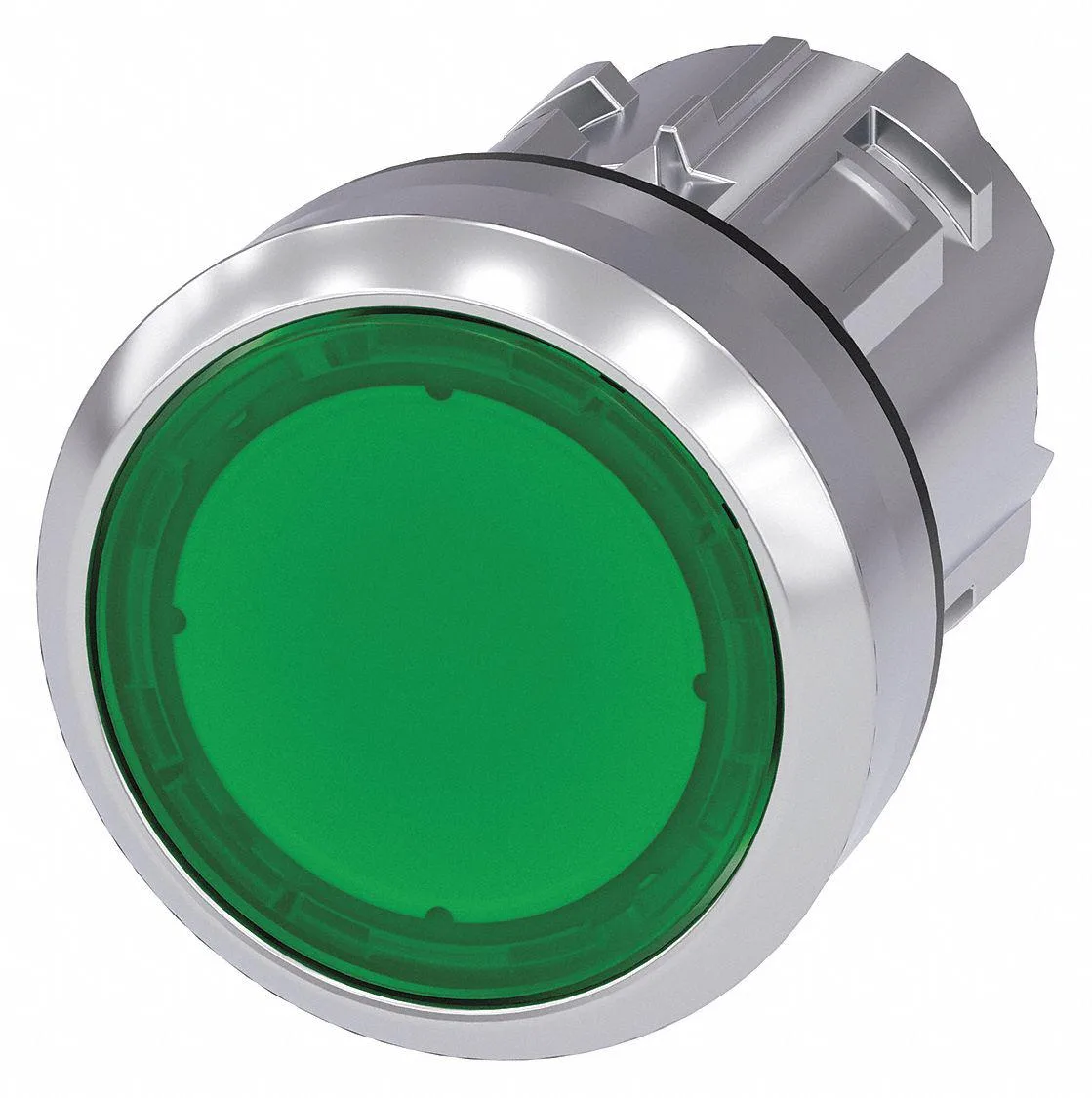
SIEMENS 52PP2D2AB 30 mm Illuminated Push Button Red 24 V LED 1NO/1NC
$179.99
0.00214197BTC
In stock