

UOTEK
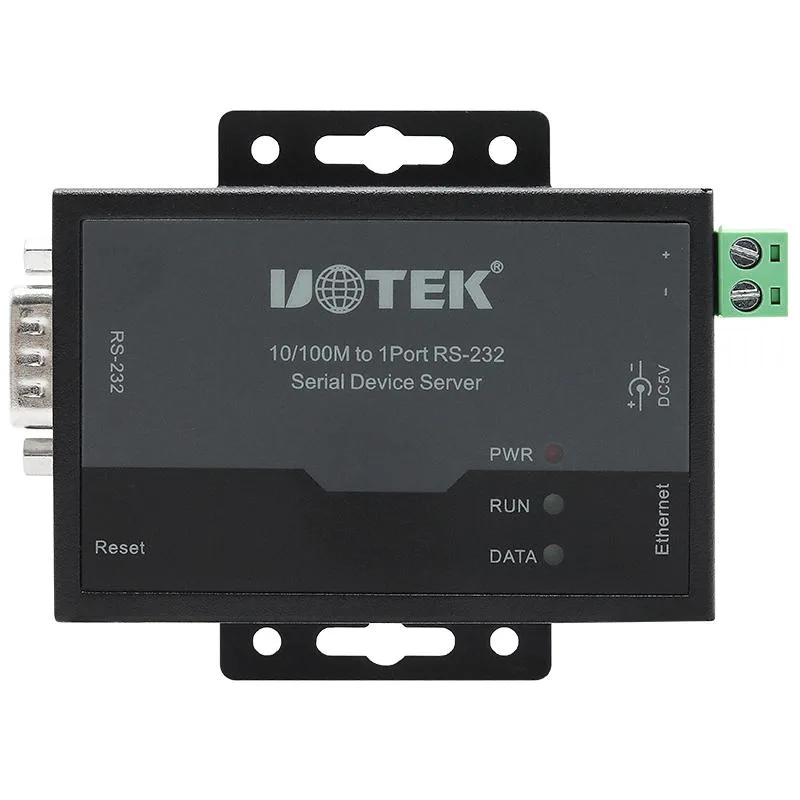
UOTEK UT-6011C Device Server 10/100M RS-232/485/422/TTL
Connects serial equipment to Ethernet with RS-232/485/422/TTL support up to 921600bps
- TypeDevice Server
- Bidirectional Ethernet to serial data transmission
- Supports RS-232, RS-485, RS-422 and TTL interfaces
- Configurable baud rates from 300 to 921600 bps
- 10/100M Ethernet port for network connectivity
- Industrial temperature range -40°C to 85°C
Industrial serial gateway
The UT-6011C converts bidirectional data between a 10/100M Ethernet link and RS-232, RS-485, RS-422 or TTL serial equipment. It targets engineers integrating legacy PLCs, meters or sensors into modern TCP/IP networks without replacing the field devices.
Fast Ethernet ceiling
The single 10/100M port caps throughput at 100 Mbps, so the unit cannot saturate gigabit infrastructure or serve high-bandwidth streams. Serial baud rates scale from 300 bps to 921600 bps with configurable parity, data bits, stop bits and RTS/CTS or XON/XOFF flow control.
Wide-temperature headroom
Rated for -40 °C to 85 °C operation and 5–95 % humidity, the server survives harsh cabinets and outdoor enclosures where commercial gear fails. The 5 V supply draws only 80 mA, while 600 W surge protection and 4 kV ESD shielding guard the serial port against industrial transients.
Highlights
- Bidirectional Ethernet to serial data transmission
- Supports RS-232, RS-485, RS-422 and TTL interfaces
- Configurable baud rates from 300 to 921600 bps
- 10/100M Ethernet port for network connectivity
- Industrial temperature range -40°C to 85°C
Specifications
| Brand | UOTEK |
|---|---|
| Model | UT-6011C |
| Type | Device Server |
Questions about this item
Should I pick the RS-232, RS-485, RS-422 or TTL version for my serial device?
This single unit supports all four standards on one interface, so you connect whichever your equipment uses without choosing a separate model.
What does the 921600 bps headline rate mean once the device is installed?
It is the maximum serial baud rate the port can handle; actual throughput will depend on your cabling, the connected device and the Ethernet link speed.
How does the 10/100M Ethernet interface cap real-world performance?
The port negotiates at 10 or 100 Mbps full-duplex, so the serial-to-Ethernet bridge cannot push data faster than the 100 Mbps wired link allows.
Also in this aisle
People compared these
Same shelf, same checkout — eight coins and a 30-minute rate lock.