

Innovation First, Inc.
Innovation First, Inc. 1UCMA-137 1U Cable Management Arm 19" 28.5"-33" computer accessory
- Product Type:Cable…
- Panel Width:19" Rac…
$72.99
0.00087845BTC
In stockWe take cryptocurrency — so the coins you hold can buy real hardware.Pay in crypto, spend it on real hardware. Free insured shipping worldwide over $399. Plain, unbranded boxes, sent from Germany.Free insured shipping over $399. Your rate is locked for 30 minutes once checkout opens.Rate locked 30 minutes. Every item sealed, serial-checked and covered by a 24-month warranty.Sealed, 24-month warranty.


Ruth's sister
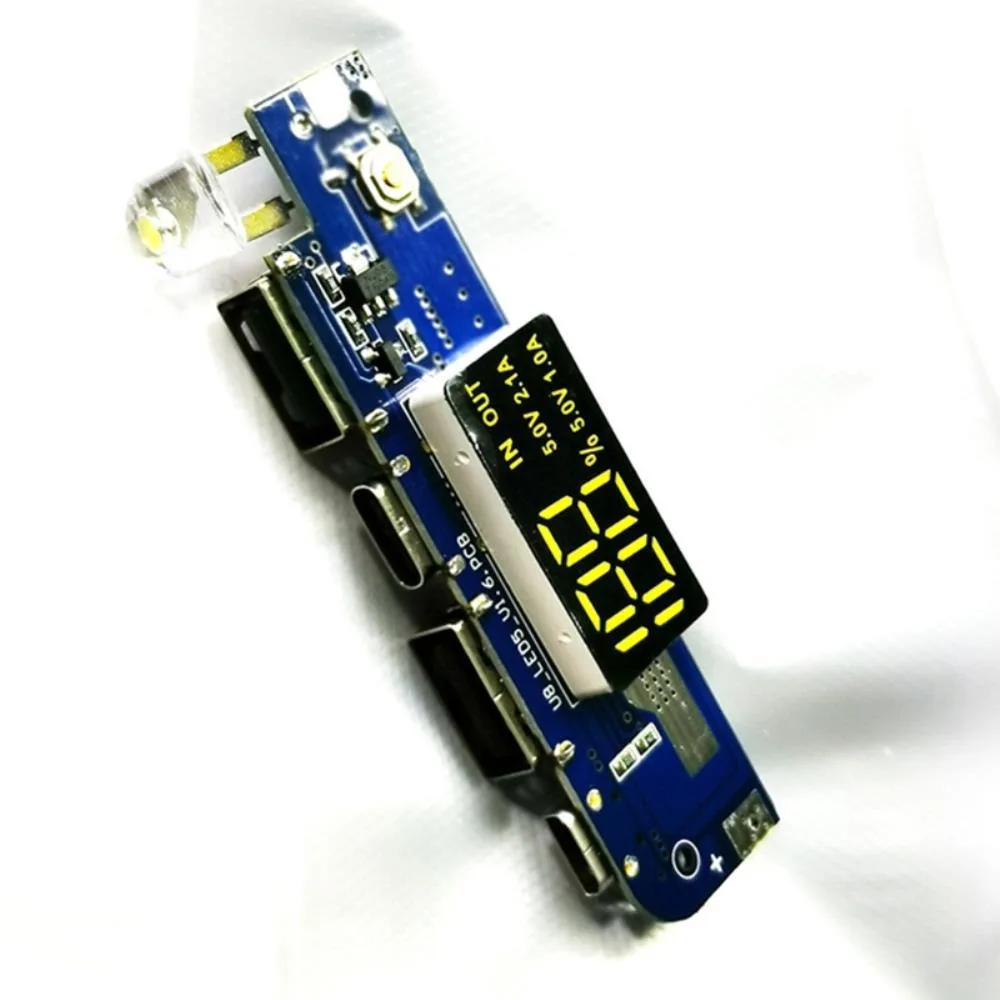
A DIY power-bank circuit board that boosts a 3.7 V lithium cell to dual USB outputs of 5 V at up to 2.4 A total
This PCB board converts a 3.7 V lithium cell into a 5 V USB supply rated up to 2.1 A on a single port or 2.4 A combined across two ports. It is intended for hobbyists building their own portable chargers for phones or tablets.
The module only accepts a 5 V charger for recharging the cell and will not work with PD or other fast-charge protocols. A minimum load of 100 mA is required, so very low-current devices such as Bluetooth headsets or MP3 players cannot be powered.
You must use a 3.7 V lithium battery rated at 3C or higher; aged or salvaged cells from laptops, drills or EVs should be tested with a multimeter before connection. Reverse polarity, series wiring and mixed cell types are strictly prohibited.
No published specifications for this item yet.
Use the single USB port, which delivers 5 V at 0.1–2.1 A maximum.
The board accepts a 5 V input; PD chargers are not supported.
The minimum recognition current is 100 mA, so very low-draw devices such as Bluetooth peripherals will not be powered.
New to this? Which coin should you pay with — what to check, what it costs to pay, and what is never asked for.
Also in this aisle
Same shelf, same checkout — eight coins and a 30-minute rate lock.
What you pay in, and what you read prices in.
Sent from your wallet at checkout
Display only — the catalogue is priced in USD
No currency matches that.
Pick the language the site speaks to you in.
No language matches that.
New here?
Already have one?
There is no automatic reset: this shop sends no mail, so there is no one-time link to ask for. Leave the address on the account and it gets picked up by hand.
Request noted
Nothing is on its way to your inbox — this shop sends no mail at all. Someone picks these up by hand.
Remembered it?


