


LORDWORLD
LORDWORLD EM06-E LTE Cat-6 HAT Development Board
LTE Cat-6 HAT adds high-speed cellular and multi-constellation GNSS to Raspberry Pi or Jetson Nano via USB 3.1
- LTE Cat-6 speeds via USB 3.1 interface
- Works with Raspberry Pi and Jetson Nano hosts
- Multi-constellation GNSS: GPS, GLONASS, BeiDou, Galileo, QZSS
- M.2 B KEY slot supports EM06-E, EM06-J, EM06-A modules
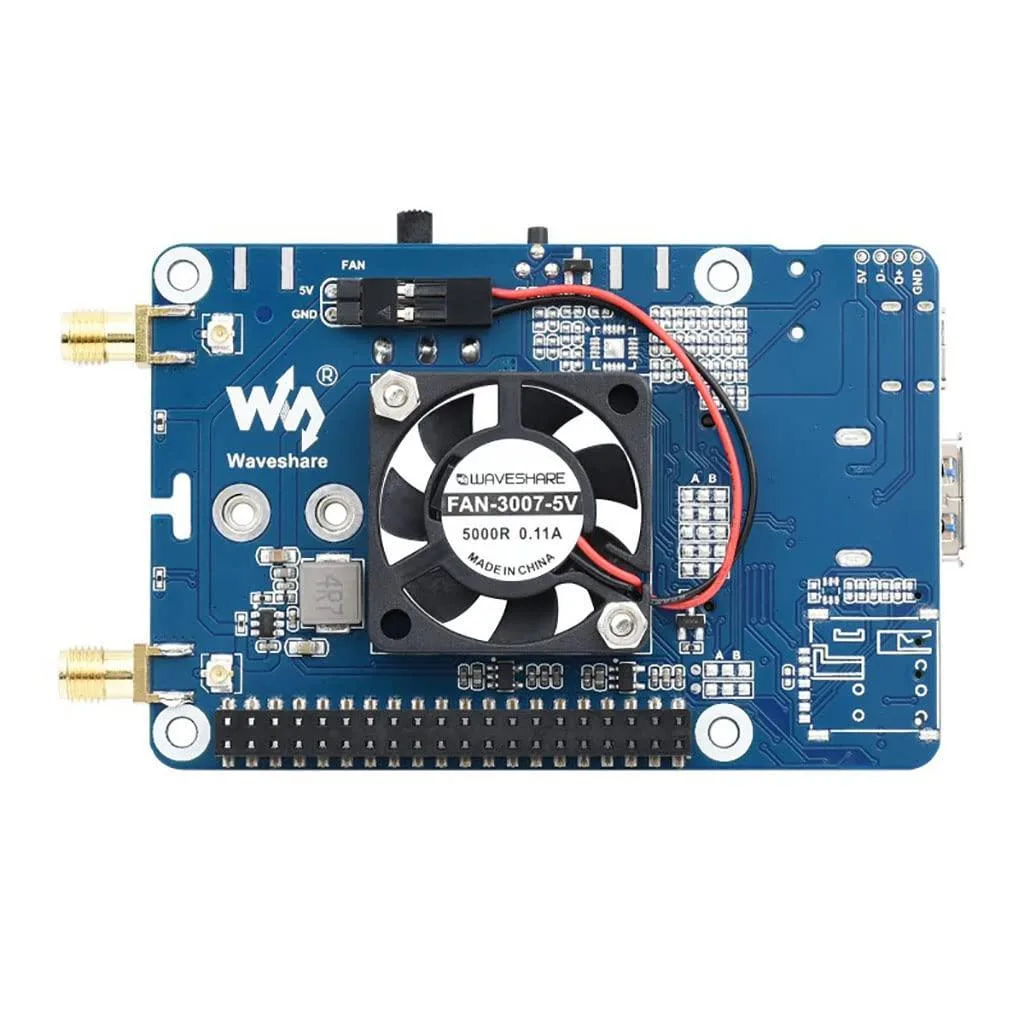
- Four SMA-to-IPEX antenna ports with two pre-soldered connectors
LTE Cat-6 HAT for Edge Computing
The LORDWORLD EM06-E is a development board that adds cellular connectivity to a Raspberry Pi or Jetson Nano host. It uses a USB 3.1 interface, backward compatible with USB 2.0, to deliver LTE-Advanced speeds. A standard M.2 B KEY slot accepts EM06-E, EM06-J or EM06-A modules. Multi-constellation GNSS provides positioning across GPS, GLONASS, BeiDou, Galileo and QZSS.
Makers adding cellular to Pi or Jetson
This board suits developers building IoT gateways, asset trackers or remote sensors that need LTE Cat-6 and precise satellite location. It works with Windows, Linux and Android drivers for broad software integration. Builders who need a different cellular category, a non-M.2 module format, or a host without USB 3.1/2.0 should look at other solutions.
M.2 B KEY slot with EM06 module support
The single specification that decides fit is the M.2 B KEY slot paired with compatibility for the EM06-E, EM06-J and EM06-A module series. Your chosen modem module must match this key and series. The board also provides four SMA to IPEX antenna interfaces with two connectors pre-soldered for flexible antenna placement.
Highlights
- LTE Cat-6 speeds via USB 3.1 interface
- Works with Raspberry Pi and Jetson Nano hosts
- Multi-constellation GNSS: GPS, GLONASS, BeiDou, Galileo, QZSS
- M.2 B KEY slot supports EM06-E, EM06-J, EM06-A modules
- Four SMA-to-IPEX antenna ports with two pre-soldered connectors
Specifications
| Brand | LORDWORLD |
|---|
Questions about this item
How do I attach the LTE Cat-6 HAT to a Raspberry Pi and which USB speed should I select?
Connect the board via the USB 3.1 port, which also works with USB 2.0 hosts, then secure the HAT onto the Pi's GPIO header; the step often missed is enabling the USB 3.1 link in the Pi config so the modem negotiates Cat-6 speeds instead of falling back to 2.0
Which antenna connectors need attention over time on the EM06-E HAT?
The board provides four SMA-to-IPEX interfaces with two pre-soldered connectors; periodically check the SMA joints for corrosion and re-tighten or swap antennas if signal degrades, since the IPEX pigtails can loosen with vibration
What thermal or throughput limit appears first when the LTE Cat-6 modem runs continuous high-speed sessions?
Sustained Cat-6 throughput over the USB 3.1 link typically hits the host controller's bulk-endpoint bandwidth ceiling before the modem overheats, so expect throughput to plateau at the USB 2.0-compatible fallback rate if the host cannot maintain 3.1 signalling
New to this? Buying PC parts with Monero — what to check, what it costs to pay, and what is never asked for.
Also in this aisle
People compared these
Same shelf, same checkout — eight coins and a 30-minute rate lock.


Tripp Lite
Tripp Lite N262 014 BL Cat6a Shielded 10G Patch Cable 14ft Blue accessories barebone
$19.99
0.00023078BTC
In stock
Intel
Intel HNS2600KPF barebone pc 1U dual Xeon DDR4 512 GB
- Xeon
- Socket R3 (LGA2011-…
$820.99
0.00947807BTC
In stock