


AMD
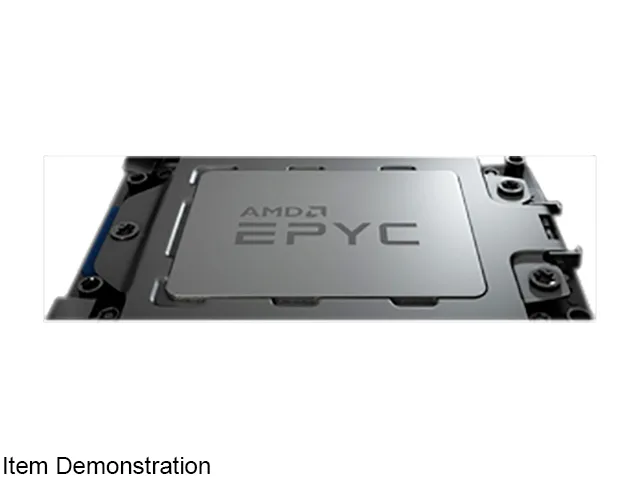
AMD EPYC 7F32 100-000000139 server processor
Eight-core server CPU with 3.7 GHz base, 3.9 GHz boost, 128 MB L3 cache and 128 PCIe 4.0 lanes for high-frequency workloads
- NameEPYC 7F32
- CPU Socket TypeSocket SP3
- # of Cores8-Core
- # of Threads16
- Operating Frequency3.7 GHz
- Max Turbo Frequency3.9 GHz
- 8 cores and 16 threads accelerate parallel workloads
- 7 GHz base and 3.9 GHz boost deliver high single-thread speed
- 128 MB L3 cache reduces latency for data-intensive tasks
- 8-channel DDR4-3200 memory controller maximises bandwidth
- 128 PCIe 4.0 lanes provide extensive I/O connectivity
High-frequency server processor
The AMD EPYC 7F32 is an eight-core, sixteen-thread CPU built for Socket SP3 platforms. It runs at a 3.7 GHz base frequency and can reach 3.9 GHz max turbo. The 128 MB L3 cache and eight-channel DDR4-3200 memory controller suit workloads that demand high single-thread speed and large memory bandwidth.
Thermals and power profile
Rated at 180 W TDP, the processor dissipates significant heat under sustained load and requires robust server-grade cooling. The 7 nm manufacturing process helps efficiency, but power draw will approach the rated figure during all-core turbo operation. Acoustic output depends entirely on the chosen heatsink and system fan curves.
Upgrade context
This part replaces lower-frequency EPYC 7002 models when per-core performance matters more than core count. The jump is worth it for latency-sensitive databases, high-frequency trading or single-threaded HPC codes that benefit from the 3.7 GHz base clock. It is not for buyers who need higher core counts or greater thread density.
Highlights
- 8 cores and 16 threads accelerate parallel workloads
- 7 GHz base and 3.9 GHz boost deliver high single-thread speed
- 128 MB L3 cache reduces latency for data-intensive tasks
- 8-channel DDR4-3200 memory controller maximises bandwidth
- 128 PCIe 4.0 lanes provide extensive I/O connectivity
Specifications
| Brand | AMD |
|---|---|
| Series | AMD EPYC 7002 |
| Name | EPYC 7F32 |
| Model | 100-000000139 |
| CPU Socket Type | Socket SP3 |
| # of Cores | 8-Core |
| # of Threads | 16 |
| Operating Frequency | 3.7 GHz |
| Max Turbo Frequency | 3.9 GHz |
| L3 Cache | 128MB |
| 64-Bit Support | Yes |
| Manufacturing Tech | 7 nm |
| Integrated Memory Controller Speed | DDR4 3200 |
| Memory Channel | 8 Channel |
| Virtualization Technology Support | Yes |
| PCI Express Revision | 4.0 |
| Max # of PCI Express Lanes | 128 |
| Thermal Design Power | 180W |
| Shipping weight | 0.82 kg |
| Package size | 152 × 152 × 102 mm |
Questions about this item
How do I install the AMD EPYC 7F32 into the Socket SP3, and what step do people often miss?
Align the triangle marker on the processor with the socket key, lower it gently without force, then close the retention frame fully; the step many miss is torquing the heatsink mounting screws in a diagonal pattern to the specified pressure so the 180 W TDP makes even contact.
What maintenance or replacement will the AMD EPYC 7F32 need later?
The processor itself has no user-serviceable parts; plan to replace thermal paste every two to three years and verify the cooler’s fan curve keeps the 180 W TDP within safe temperatures under sustained load.
What limit appears first when the AMD EPYC 7F32 runs at full load for long periods?
The 180 W thermal design power is the first ceiling; if cooling cannot dissipate that heat continuously, the 3.7 GHz base clock will throttle before the 3.9 GHz max turbo or the 128 PCIe 4.0 lanes become bottlenecks.
New to this? Buying a processor with crypto — what to check, what it costs to pay, and what is never asked for.
Also in this aisle
People compared these
Same shelf, same checkout — eight coins and a 30-minute rate lock.


Tripp Lite
Tripp Lite N262 014 BL Cat6a Shielded 10G Patch Cable 14ft Blue accessories barebone
$19.99
0.00023018BTC
In stock
Intel
Intel HNS2600KPF barebone pc 1U dual Xeon DDR4 512 GB
- Xeon
- Socket R3 (LGA2011-…
$820.99
0.0094534BTC
In stock