Accsoon
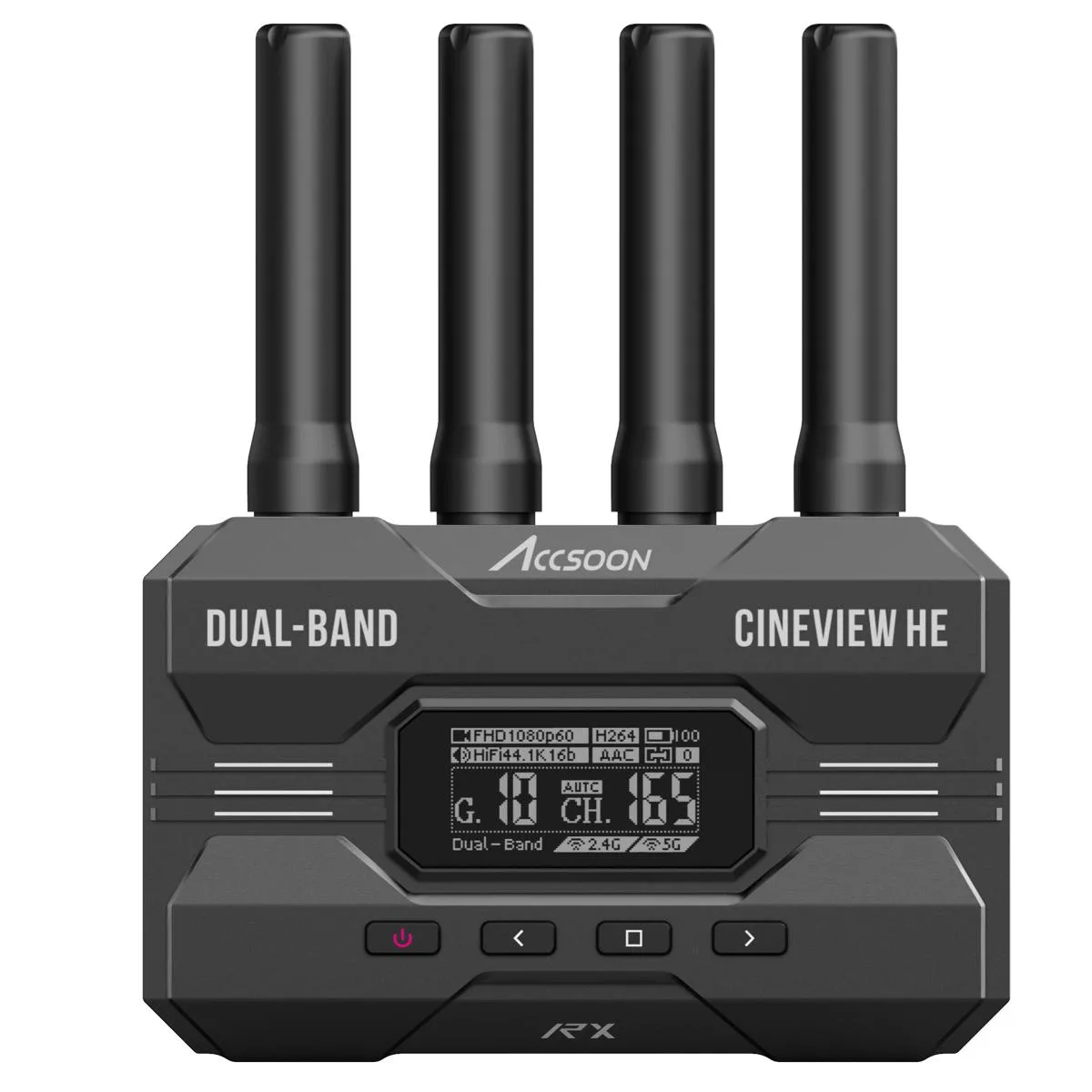
Accsoon CineView SE Multi-Spectrum Wireless Video Transmitter 1200ft 1080p HDMI SDI
$181.99
0.00210741BTC
In stockWe take cryptocurrency — so the coins you hold can buy real hardware.Pay in crypto, spend it on real hardware. Free insured shipping worldwide over $399. Plain, unbranded boxes, sent from Germany.Free insured shipping over $399. Your rate is locked for 30 minutes once checkout opens.Rate locked 30 minutes. Every item sealed, serial-checked and covered by a 24-month warranty.Sealed, 24-month warranty.


Transition Networks
Stand-alone media converter links 100Base-TX copper to 100Base-FX fibre at line speed for low-latency networks
This stand-alone media converter bridges 100Base-TX copper ports with 100Base-FX fibre ports. It operates at the physical layer to pass data through at line speed. Network integrators use it to add fibre segments to existing Fast Ethernet copper installations.
The device converts signals between the two 100 Mbps standards without adding store-and-forward latency. Because it works at Layer 1, the practical throughput is limited to the 100 Mbps signalling rate of both interfaces. It does not perform switching, filtering or auto-negotiation beyond the physical medium.
The FX port uses a single-mode optical interface rated for distances up to 6 km. This reach determines whether the converter suits a given campus or building link. Buyers needing longer spans or multi-mode connectivity must select a different model.
No published specifications for this item yet.
This model converts 100Base-TX copper to 100Base-FX fiber at line speed, so select it when you need a direct 100 Mbps media conversion without rate change.
Data passes through the converter at full 100 Mbps with no buffering delay, keeping latency at the physical layer minimum for time-sensitive applications.
The FX port follows the 100Base-FX standard for multi-mode fiber; the achievable distance depends on the fiber grade and link budget of the connected optics.
Also in this aisle
Same shelf, same checkout — eight coins and a 30-minute rate lock.
What you pay in, and what you read prices in.
Sent from your wallet at checkout
Display only — the catalogue is priced in USD
No currency matches that.
Pick the language the site speaks to you in.
No language matches that.
New here?
Already have one?
There is no automatic reset: this shop sends no mail, so there is no one-time link to ask for. Leave the address on the account and it gets picked up by hand.
Request noted
Nothing is on its way to your inbox — this shop sends no mail at all. Someone picks these up by hand.
Remembered it?