


Seeed Studio
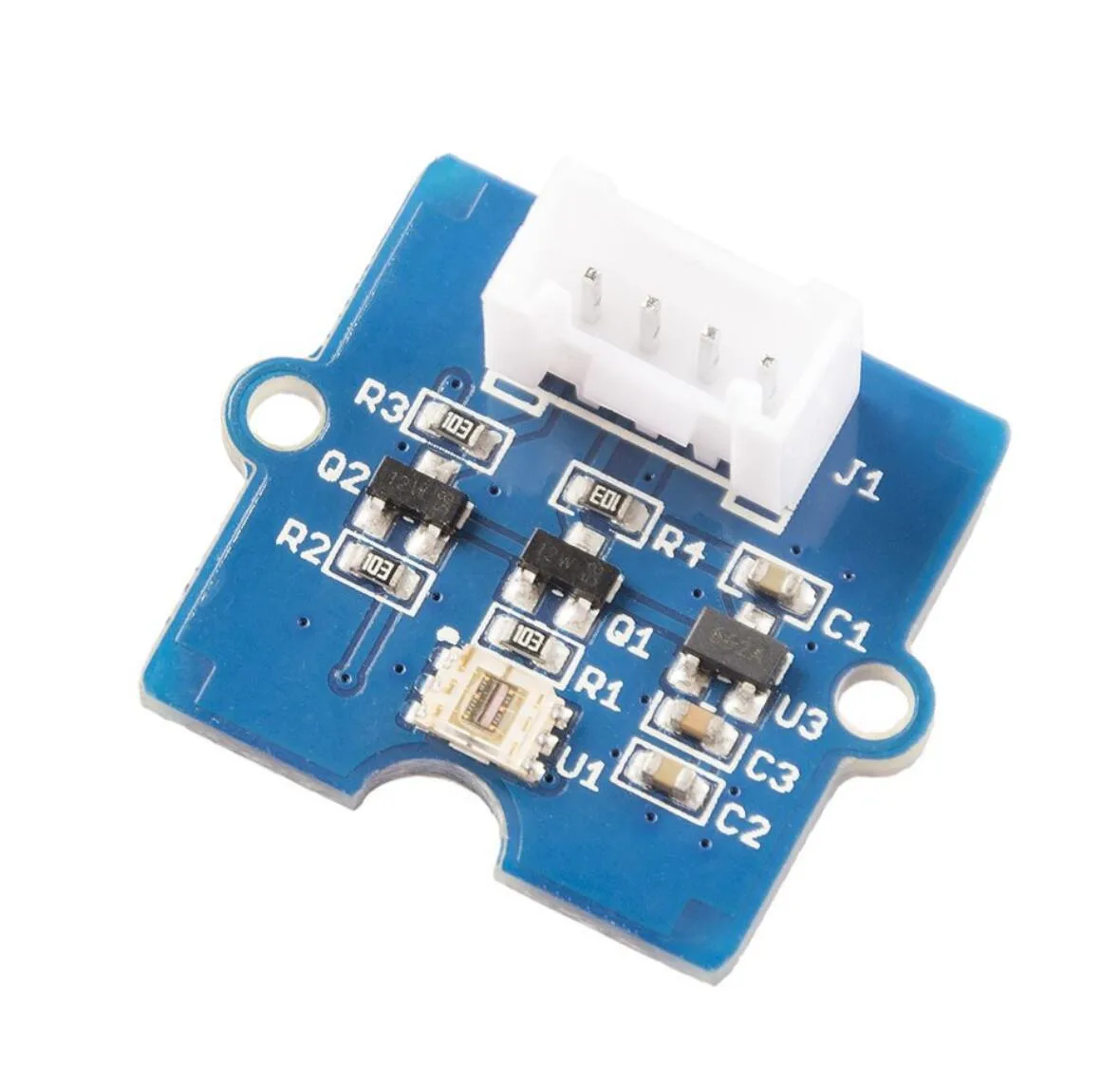
Seeed Studio Grove Digital Light Sensor TSL2561
Measures 0.1–40,000 LUX with 16-bit I2C output and selectable infrared, full-spectrum or human-visible modes
- TypeSensors
- Selectable infrared, full-spectrum or human-visible detection modes
- 16-bit digital output at 400 kHz I2C Fast-Mode
- Wide 0.1 - 40,000 LUX dynamic range for varied lighting
- Operates from -40 to 85 °C across environments
- Grove unified socket enables plug-and-play microcontroller integration
Grove Digital Light Sensor TSL2561
This sensor module measures ambient light across a 0.1 to 40,000 LUX range. It offers 16-bit digital output via I2C Fast-Mode at 400 kHz. Three selectable detection modes cover infrared, full-spectrum, and human visible light. The Grove unified socket enables plug-and-play connection with compatible microcontrollers.
Makers needing calibrated lux data
Developers building automatic display dimming, gardening monitors, or weather stations will appreciate the programmable interrupt thresholds. Projects requiring analog voltage output or spectral analysis beyond the three built-in modes should consider alternative sensors. The operating range of -40 to 85 suits most indoor and outdoor enclosures.
16-bit resolution at 400 kHz I2C
The single specification that decides fit is the 16-bit digital resolution delivered over a 400 kHz I2C bus. This precision determines whether the module can detect the fine light changes your application requires. Verify your host controller supports this speed and bit depth before purchase.
Highlights
- Selectable infrared, full-spectrum or human-visible detection modes
- 16-bit digital output at 400 kHz I2C Fast-Mode
- Wide 0.1 - 40,000 LUX dynamic range for varied lighting
- Operates from -40 to 85 °C across environments
- Grove unified socket enables plug-and-play microcontroller integration
Specifications
| Type | Sensors |
|---|
Questions about this item
Which microcontroller board do I need so the Grove socket on this TSL2561 sensor works without extra wiring?
Any board that provides a standard Grove I2C socket — such as a Seeed Studio Grove Base Shield on an Arduino Uno — will plug straight in.
Can I keep my older 5 V Arduino and still read the 16-bit output at 400 kHz I2C Fast-Mode?
Yes, the module’s on-board level shifting lets a 5 V host communicate at 400 kHz without damaging the sensor.
After wiring it up, how do I confirm the sensor is delivering human-visible lux readings in the 0.1 to 40000 LUX range?
Run a sketch that selects human visible mode, then shine a known light source; the serial output should track the expected lux value.
Also in this aisle
People compared these
Same shelf, same checkout — eight coins and a 30-minute rate lock.


Keyence
Keyence LR-ZB250AN Laser Distance Sensor NPN 2 m Cable 35-250 mm Class 1
- Sensors
$397.99
0.0046036BTC
In stock
Keyence
Keyence PZ-G41N photoelectric sensor NPN 1 m range 10-30 VDC IP67
- Sensors
$149.99
0.00173495BTC
In stock