


Ruth's sister
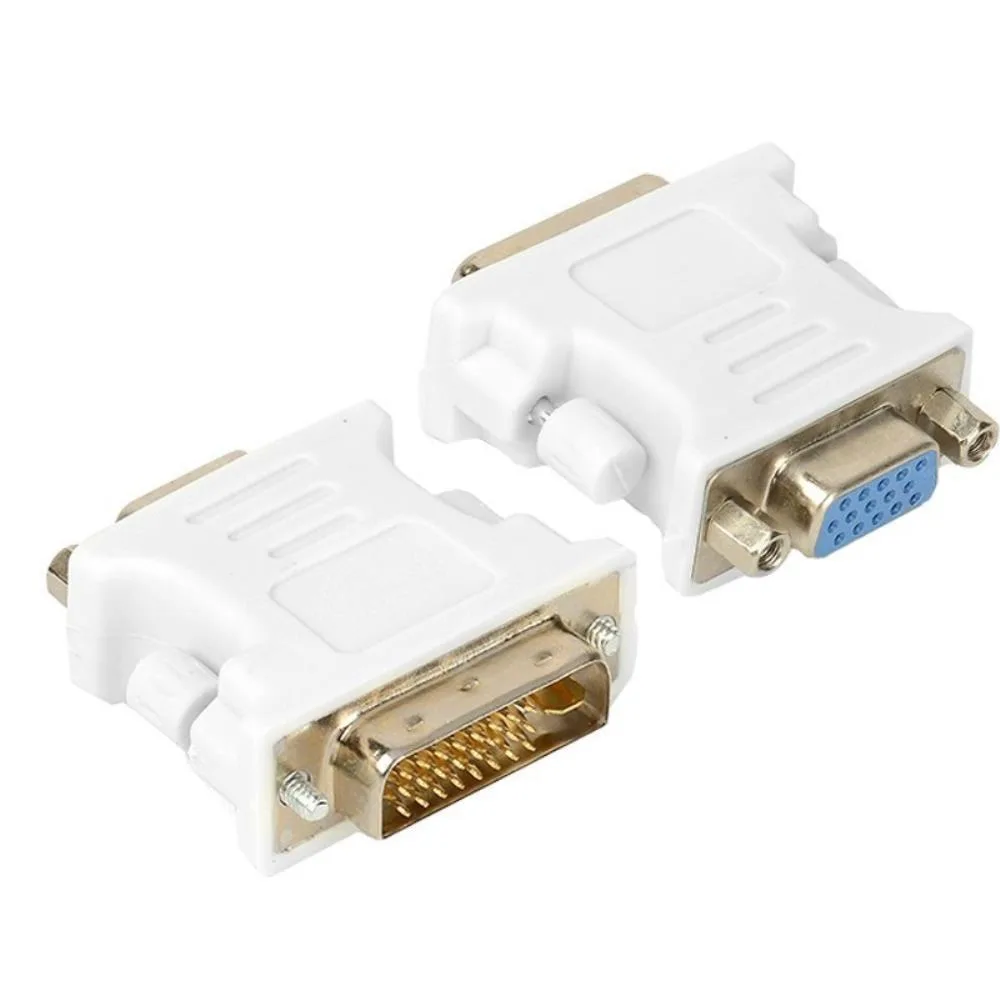
Ruth's sister DVI-I 29 Male to VGA 15 Female Adapter
Connects a DVI-I 29-pin source to a VGA 15-pin display, weighing about 20 g
- Connect DVI-I graphics cards to VGA monitors
- 29-pin male to 15-pin female connector
- Passive analogue signal conversion only
- Weighs about 20 g for portable use
- Compact 40×34×42×15 mm polybag package
DVI-I Male to VGA Female Adapter
This DVI-I male to VGA female adapter connects a graphics card with a DVI-I output to a monitor or projector that accepts a VGA input. It is intended for users who need to link legacy displays to modern video outputs without active signal conversion. The passive design suits office, home-theatre and basic computing setups.
Passive operation with no external power
The adapter draws no external power and adds no active circuitry, so it produces no audible noise and generates negligible heat during normal use. Its compact 20 g form factor fits behind crowded I/O panels without stressing the port. Because it is a straight-through pin adapter, power draw remains limited to the source device’s standard signalling current.
Sustained passive signal transmission
Under continuous operation the adapter simply passes the analogue RGB and sync pins from the DVI-I 29-pin connector to the VGA 15-pin socket, so performance does not degrade over time. It cannot convert a digital-only DVI-D signal, so systems lacking analogue output on the DVI port will not display an image. Buyers who need digital-to-analogue conversion or bidirectional use should select an active converter instead.
Highlights
- Connect DVI-I graphics cards to VGA monitors
- 29-pin male to 15-pin female connector
- Passive analogue signal conversion only
- Weighs about 20 g for portable use
- Compact 40×34×42×15 mm polybag package
Specifications
No published specifications for this item yet.
Questions about this item
How do I install the DVI-I 29 male to VGA 15 female adapter, and what step do people get wrong?
Connect the DVI-I 29 male end to the graphics card DVI-I port and the VGA 15 female end to the monitor cable; the common mistake is using it on a DVI-D port which lacks the analogue pins required for VGA conversion.
What maintenance or replacement will this adapter need later?
The passive adapter has no moving parts or firmware; replacement is only needed if the 29-pin DVI connector or 15-pin VGA socket suffers physical damage or corrosion.
What limit shows up first under sustained use?
The analogue VGA signal quality is the limiting factor; cable length and interference affect image clarity before the adapter itself degrades.
New to this? Which coin should you pay with — what to check, what it costs to pay, and what is never asked for.
Also in this aisle
People compared these
Same shelf, same checkout — eight coins and a 30-minute rate lock.



Black Box Corporation
Black Box Corporation CAT6 EZ-RJ45 Modular Plugs 100-Pack
$95.99
0.00115509BTC
In stock
