Sunfounder
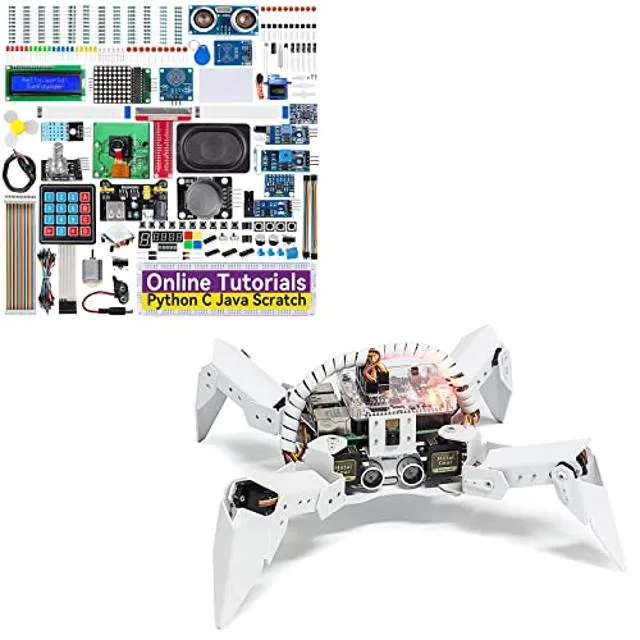
Sunfounder Raspberry Pi Ultimate Kit with PiCrawler AI Robot 337 components 131 projects
$174.99
0.00208019BTC
In stockWe take cryptocurrency — so the coins you hold can buy real hardware.Pay in crypto, spend it on real hardware. Free insured shipping worldwide over $399. Plain, unbranded boxes, sent from Germany.Free insured shipping over $399. Your rate is locked for 30 minutes once checkout opens.Rate locked 30 minutes. Every item sealed, serial-checked and covered by a 24-month warranty.Sealed, 24-month warranty.

MCDODO
Development board with ARM Cortex-M7 at 600 MHz, pre-soldered header pins, Ethernet PHY, SD card socket and USB host port
The MCDODO Teensy 4.1 is a single-board computer built around an ARM Cortex-M7 core clocked at 600 MHz. It arrives with header pins pre-soldered and provides four times the flash memory of earlier designs. An on-board Ethernet PHY, SD card socket and USB host port expand connectivity options for embedded projects.
This board suits makers who need high-speed deterministic control and wired Ethernet in a compact footprint. It is not a fit for applications that demand built-in Wi-Fi or Bluetooth radios. Developers requiring a full Linux operating system or video output should look at a different class of device.
| Type | Single Board Computers |
|---|
Align the pins with the breadboard rows and press firmly until seated; the step people miss is checking every pin for a solid connection before powering the board.
Keep the microSD slot free of dust with occasional compressed air and inspect the USB host port for debris or bent contacts after repeated insertions.
New to this? Buying PC parts with Monero — what to check, what it costs to pay, and what is never asked for.
Also in this aisle
Same shelf, same checkout — eight coins and a 30-minute rate lock.
What you pay in, and what you read prices in.
Sent from your wallet at checkout
Display only — the catalogue is priced in USD
No currency matches that.
Pick the language the site speaks to you in.
No language matches that.
New here?
Already have one?
There is no automatic reset: this shop sends no mail, so there is no one-time link to ask for. Leave the address on the account and it gets picked up by hand.
Request noted
Nothing is on its way to your inbox — this shop sends no mail at all. Someone picks these up by hand.
Remembered it?