
HPE
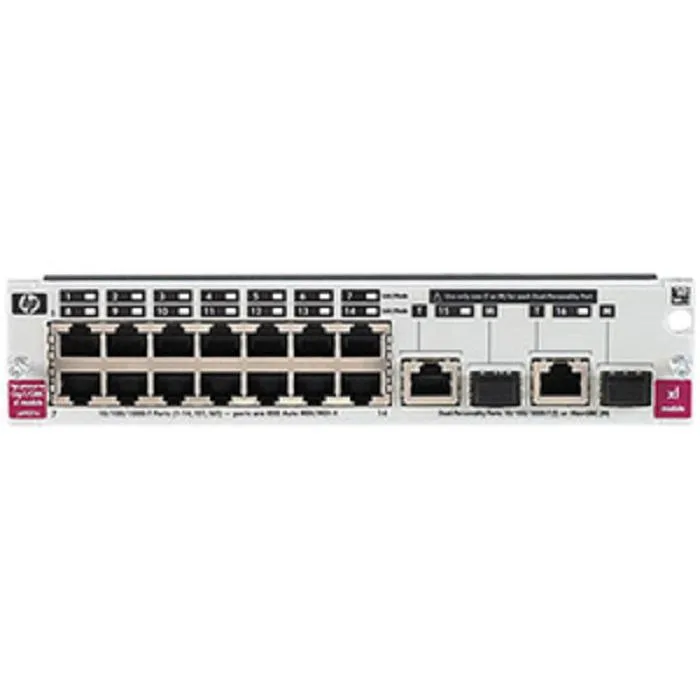
HPE JC094A 16-port Gigabit Switch Module
A 16-port Gigabit module adding 10/100/1000Base-T twisted-pair connectivity to compatible H3C A5800 series switches
- 16 copper ports expand switching capacity
- 10/100/1000Base-T supports mixed-speed devices
- Gigabit Ethernet delivers 1000 Mbps throughput
- Twisted-pair media simplifies cabling deployment
- Compatible with H3C A5800 series switches
HPE JC094A 16-Port Switching Module
The HPE JC094A is a 16-port Gigabit switching module designed to expand port density on compatible H3C A5800 series switches. It provides sixteen 10/100/1000Base-T LAN interfaces for copper connectivity in enterprise campus or data centre environments. Network administrators use it to add high-density access ports without deploying additional standalone switches.
Practical Limits of Twisted Pair Gigabit Ethernet
Each port operates at 10, 100 or 1000 Mbps over twisted pair cabling with a maximum segment length of 100 metres. The module delivers a maximum data transfer rate of 100 Gbps aggregate switching capacity across the sixteen ports. Performance is constrained by the physical limits of copper media and the 1000Base-T standard.
Upgrading from Lower-Density or Slower Modules
This module replaces older 10/100 line cards or lower-port-count Gigabit modules to increase both speed and port count in a single slot. The jump is worthwhile when consolidation reduces chassis slot usage and cabling complexity. It is not suited for deployments requiring fibre uplinks, Power over Ethernet, or compatibility outside the H3C A5800 platform.
Highlights
- 16 copper ports expand switching capacity
- 10/100/1000Base-T supports mixed-speed devices
- Gigabit Ethernet delivers 1000 Mbps throughput
- Twisted-pair media simplifies cabling deployment
- Compatible with H3C A5800 series switches
Specifications
| Brand | HPE |
|---|
Questions about this item
Which module fits a 16-port Gigabit requirement?
The JC094A provides exactly 16 ports of 10/100/1000Base-T for twisted-pair cabling.
What does the 100 maximum data transfer rate mean in daily use?
It indicates a 100 Mbit/s ceiling per port, so each link tops out at Fast Ethernet speed despite the Gigabit PHY.
How does the 10/100/1000Base-T interface limit real-world throughput?
The port negotiates up to 1 Gbit/s, but the module’s 100 Mbit/s rating caps sustained traffic well below that.
Also in this aisle
People compared these
Same shelf, same checkout — eight coins and a 30-minute rate lock.


IBM
IBM 00JX058 Xeon E5-2640 v3 8-core 2.60 GHz 20 MB L3 90 W switch module
$217.99
0.00253722BTC
In stock
