Accsoon
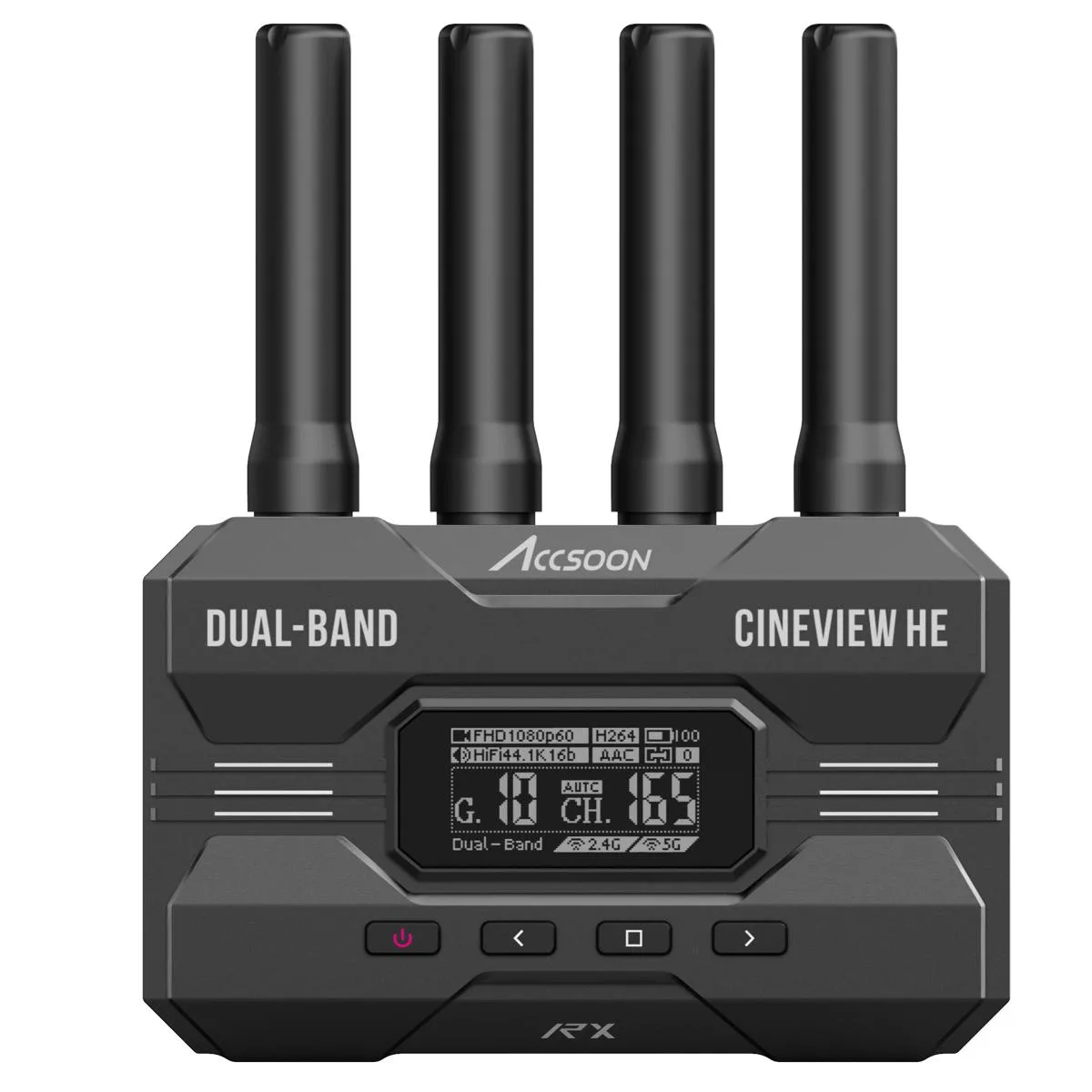
Accsoon CineView SE Multi-Spectrum Wireless Video Transmitter 1200ft 1080p HDMI SDI
$181.99
0.00211927BTC
In stockWe take cryptocurrency — so the coins you hold can buy real hardware.Pay in crypto, spend it on real hardware. Free insured shipping worldwide over $399. Plain, unbranded boxes, sent from Germany.Free insured shipping over $399. Your rate is locked for 30 minutes once checkout opens.Rate locked 30 minutes. Every item sealed, serial-checked and covered by a 24-month warranty.Sealed, 24-month warranty.


Dynamic cardioid microphone for instruments, drums, percussion and vocals with 50 Hz to 15,000 Hz response and XLR connector
The GLS Audio ES-57 is a dynamic cardioid microphone built for musicians and engineers who need reliable capture of instruments, drums, percussion and vocals. Its unidirectional pattern focuses on the source while rejecting off-axis sound in both studio and live settings.
The microphone terminates in an XLR connector and presents a 300 ohm impedance at 1,000 Hz, allowing direct connection to Lo-Z balanced inputs or Hi-Z 1/4 inch interfaces without additional matching gear. The cardioid response reduces bleed from nearby monitors or other instruments during tracking.
A mic clip is supplied in the box, providing a secure mounting point for standard stands so the microphone can be positioned quickly on drums, amplifiers or vocal booths. No software or cables are bundled, leaving cable choice and signal-chain decisions entirely to the user.
| Brand | GLS Audio |
|---|---|
| Model | ES-57 |
| Part Number | 37-206 |
| Color | Black |
| Connector | XLR |
| Microphone Sensitivity | 72 decibels |
| Microphone Signal to Noise Ratio(SNR) | 72 |
The microphone has a signal-to-noise ratio of 72 dB, so typical interface gain settings keep self-noise well below the programme material even after hours of use.
As a passive dynamic microphone it generates no heat and has no fan; the metal chassis simply acts as a rugged shield during extended performances.
You need a standard XLR cable; the microphone uses a Lo-Z XLR 3-pin balanced output and also works with Hi-Z 1/4" via an adapter.
Also in this aisle
Same shelf, same checkout — eight coins and a 30-minute rate lock.
What you pay in, and what you read prices in.
Sent from your wallet at checkout
Display only — the catalogue is priced in USD
No currency matches that.
Pick the language the site speaks to you in.
No language matches that.
New here?
Already have one?
There is no automatic reset: this shop sends no mail, so there is no one-time link to ask for. Leave the address on the account and it gets picked up by hand.
Request noted
Nothing is on its way to your inbox — this shop sends no mail at all. Someone picks these up by hand.
Remembered it?