Sunfounder
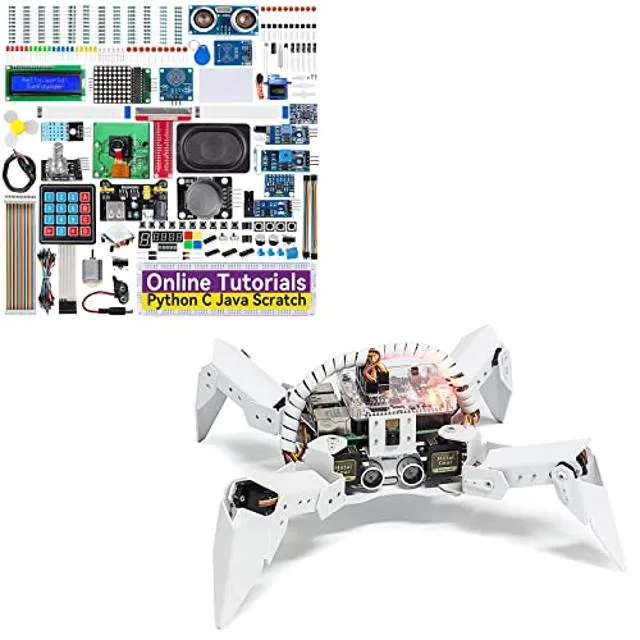
Sunfounder Raspberry Pi Ultimate Kit with PiCrawler AI Robot 337 components 131 projects
$174.99
0.00207324BTC
In stockWe take cryptocurrency — so the coins you hold can buy real hardware.Pay in crypto, spend it on real hardware. Free insured shipping worldwide over $399. Plain, unbranded boxes, sent from Germany.Free insured shipping over $399. Your rate is locked for 30 minutes once checkout opens.Rate locked 30 minutes. Every item sealed, serial-checked and covered by a 24-month warranty.Sealed, 24-month warranty.

EVGA
GeForce 8800 GS graphics card with 384MB GDDR3 on a 192-bit bus, 96 CUDA cores at 550 MHz and dual DVI outputs
The EVGA GeForce 8800 GS is a graphics card built around the NVIDIA GeForce 8800 GS GPU. It delivers 96 CUDA cores clocked at 550 MHz and 384 MB of GDDR3 memory on a 192-bit bus. The card targets systems that need DirectX 10 and OpenGL 2.0 support for older titles or legacy workloads.
Installation requires a PCI Express 2.0 x16 slot and draws power from the motherboard. Two DVI connectors drive digital displays up to 2560 x 1600, while an HDTV and S-Video output handle analogue screens. The single-slot design leaves adjacent expansion slots free for other add-in cards.
The 550 MHz core clock and 1600 MHz effective memory clock remain steady during extended sessions because the GPU’s modest throughput keeps thermal output low. A 400 MHz RAMDAC ensures stable analogue signalling. Performance scales linearly with shader-limited DirectX 10 applications rather than peaking in short bursts.
| Brand | EVGA |
|---|---|
| Model | 384-P3-N851-AR |
| Interface | PCI Express 2.0 x16 |
| Chipset Manufacturer | NVIDIA |
| GPU | GeForce 8800 GS |
| Core Clock | 550 MHz |
| CUDA Cores | 96 |
| Effective Memory Clock | 1600MHz |
| Memory Size | 384MB |
| Memory Interface | 192-Bit |
| Memory Type | GDDR3 |
| DirectX | DirectX 10 |
| OpenGL | OpenGL 2.0 |
| DVI | 2 x DVI |
| TV-Out | HDTV / S-Video Out |
| VIVO | No |
| Tuner | None |
| RAMDAC | 400MHz |
| Max Resolution | 2560 x 1600 |
| RoHS Compliant | Yes |
| SLI Support | SLI Ready |
| Cooler | Single Fan |
| Power Connector | 6-Pin |
| Dual-Link DVI Supported | Yes |
| HDCP Ready | Yes |
The 384 MB 192-bit GDDR3 memory limits texture capacity, so sustained high-resolution loads will hit VRAM capacity before the 96 CUDA cores reach full utilisation.
The single-slot cooler exhausts heat through the rear bracket; expect audible fan noise and warm case temperatures under continuous 550 MHz operation.
The board draws auxiliary power through a single 6-pin PCIe connector; verify your power supply includes this lead before installation.
New to this? How to buy a graphics card with Bitcoin — what to check, what it costs to pay, and what is never asked for.
Also in this aisle
Same shelf, same checkout — eight coins and a 30-minute rate lock.
What you pay in, and what you read prices in.
Sent from your wallet at checkout
Display only — the catalogue is priced in USD
No currency matches that.
Pick the language the site speaks to you in.
No language matches that.
New here?
Already have one?
There is no automatic reset: this shop sends no mail, so there is no one-time link to ask for. Leave the address on the account and it gets picked up by hand.
Request noted
Nothing is on its way to your inbox — this shop sends no mail at all. Someone picks these up by hand.
Remembered it?